


What is a Smart City? Everything you need to know.

Constantine Malynin
CEO and Co-founder
Table of content
Smart Cities are urban areas that utilize advanced technologies and data driven solutions to enhance the quality of life for residents, improve urban efficiency, and promote sustainability. The concept has gained prominence in the 21st century as cities grapple with rapid urbanization, environmental challenges, and the need for improved governance. Notable examples include cities like Singapore, Barcelona, and Amsterdam, which showcase diverse strategies aimed at integrating technology with urban living to address contemporary issues.[1][2][3]
The importance of smart cities lies in their potential to transform urban environments into more livable, connected, and sustainable spaces. This transformation is facilitated through the integration of technologies such as the Internet of Things (IoT), artificial intelligence, and big data analytics, which enable real-time monitoring and management of urban services like transportation, energy, and waste management.[- 4][5] Additionally, citizen engagement plays a crucial role in these initiatives, fostering transparency and inclusivity in urban governance.[6]

Despite their promising potential, the development of smart cities is not without controversies. Challenges include concerns over data privacy and governance, the digital divide, and the environmental impact of technological infrastructure. Critics argue that the implementation of smart city technologies can exacerbate existing inequalities and raise ethical questions regarding surveillance and data usage.[7][8] As such, successful smart city initiatives must balance innovation with responsible governance and community involvement to ensure equitable outcomes for all residents.
In summary, smart cities represent a forward-looking approach to urban planning and management, emphasizing the integration of technology with sustainability and citizen participation. As urban areas continue to evolve, the principles and practices of smart cities will play an increasingly vital role in shaping resilient and inclusive urban futures.[9]
Historical Context

The evolution of urban planning has played a crucial role in shaping the concept of smart cities. Early civilizations laid the groundwork for organized urban spaces
with the cities of Mesopotamia and the Indus Valley, which showcased sophisticated street layouts and public infrastructure[1]. As societies progressed through various historical epochs, including the Medieval and Renaissance periods, urban planning continued to adapt to the needs and challenges of the time, such as defence, commerce, and aesthetic values[2][3].
Post-World War II Developments
The aftermath of World War II marked a significant turning point in urban planning, characterized by extensive rebuilding efforts and a shift toward modernist principles. Cities like Berlin and Warsaw underwent reconstruction that prioritized functionality and efficiency[1]. This era also saw the rise of suburbanization in the United States, spurred by the post-war economic boom and the popularity of automobile culture. The construction of mass housing developments, exemplified by Levittown, transformed urban landscapes and emphasized car-centric design[4][1].
Challenges of the Late 20th Century
By the 1960s, however, the consequences of these planning practices sparked significant social upheaval. Urban renewal initiatives often led to community displacement, and the emphasis on highways contributed to environmental injustices and social inequities[4]. This period of unrest gave rise to advocacy planning, where grassroots movements began to challenge top-down approaches, advocating for more inclusive and participatory planning processes[4].

Excerpt From
Francis D.K. Ching, Architecture – Form, Space and Order 3rd Edition
This material may be protected by copyright.
The Rise of Contemporary Urban Planning
As we moved into the late 20th century, urban planning began to embrace new ideologies that responded to globalization, technological advancements, and environmental concerns. Concepts such as New Urbanism and Transit-Oriented Development (TOD) gained traction, emphasizing sustainability, mixed-use developments, and reduced reliance on automobiles[1]. Today, contemporary urban planning integrates smart city technologies and prioritizes resilience, aiming to create livable urban environments that are both adaptive and efficient[1].
Through this historical lens, we can better appreciate how past practices and ideologies inform the current development of smart cities, highlighting the ongoing quest for sustainable and equitable urban living.
Characteristics of Smart Cities

Table: Energy Consumption Reduction due to Smart Grid Implementations
Smart cities are urban areas that leverage technology and data-driven solutions to enhance the quality of life for residents while improving urban efficiency and sustainability. These characteristics are primarily categorized into several dimensions, including technology integration, citizen engagement, environmental sustainability, and efficient governance.
Citizen Engagement
Citizen engagement is a vital characteristic of smart cities, enabled by mobile applications and smart devices that facilitate real-time interaction between residents and city services[5]. This engagement allows citizens to report issues, access information, and participate in decision-making processes, promoting transparency and inclusivity within urban governance[6].

Technology Integration
At the core of a smart city lies the integration of digital technologies and the Internet of Things (IoT). Smart cities utilize interconnected systems to collect data from various sources, including citizens, devices, buildings, and transportation systems[7][8]. This data-driven approach enables real-time monitoring and management of urban services, such as traffic control, energy distribution, and waste management, thus enhancing overall operational efficiency[6][9].
Data Sharing and Applications
Smart cities encourage the sharing of data among local governments, businesses, and residents, fostering collaborative decision-making processes. Applications of this data range from traffic management and public transportation to urban forestry and emergency services[8]. The deployment of smart technologies allows for improved communication and service delivery, resulting in more responsive urban governance.
Environmental Sustainability
Sustainable development is a cornerstone of smart city initiatives. These cities em- ploy strategies aimed at reducing energy consumption, minimizing greenhouse gas emissions, and improving overall urban health[2][7]. Innovations such as renewable
energy solutions and efficient waste management systems contribute to lower carbon footprints and promote long-term ecological resilience. The utilization of big data and simulation also aids in evaluating the effectiveness of sustainability measures, optimizing resource allocation and project planning[2][7].
Efficient Governance
Smart cities leverage advanced technology for more effective governance, utilizing data to monitor urban conditions and inform policy decisions. This approach includes implementing robust cybersecurity measures to protect citizens’ data privacy as cities become more interconnected[5][10]. Moreover, the integration of various transportation modes through IoT facilitates smoother transit experiences, further enhancing urban mobility and accessibility[5][11].
Technologies Used in Smart Cities
Smart cities leverage a variety of advanced technologies to enhance urban living, improve efficiency, and promote sustainability. The integration of these technologies facilitates the collection and analysis of data that can inform decision-making and optimize city operations.
Internet of Things (IoT)

The Internet of Things refers to networks of interconnected devices equipped with sensors and software that can collect and exchange data[12][13]. These “smart objects” range from household devices like smart thermostats to infrastructure components such as traffic lights. The functionality of IoT devices is often supported by public Wi-Fi, which is essential for the delivery of various city services. In smart city applications, IoT technology enables automation, allowing systems to respond in real-time to changing conditions. For example, streetlights can adjust their brightness based on sensor feedback, thereby enhancing energy efficiency[12][14].
Information and Communication Technologies (ICT)
Information and communication technologies play a crucial role in smart cities by enabling the capture, storage, retrieval, and analysis of data. The U.S. Department of Commerce’s National Institute of Standards and Technology defines ICT as en- compassing all aspects of data management, including security and transfer[12]. These technologies are pivotal in improving services across transportation, energy, and infrastructure.
Artificial Intelligence (AI)
Artificial intelligence enhances smart city operations by utilizing data analytics and machine learning to solve complex urban problems[12][15]. AI can optimize
processes such as waste collection, where algorithms determine the most efficient routes, thereby reducing carbon emissions. Furthermore, AI contributes to public
safety initiatives by analyzing data from security cameras to identify potential threats- [12].
Automation
Automation technologies in smart cities facilitate the performance of tasks with minimal human intervention. This responsiveness to real-time data helps cities become more efficient. For instance, smart traffic systems can manage flow and reduce congestion based on data collected from various sensors throughout the city[12][15].
Big Data Analytics
Smart cities generate and analyze large volumes of data from various sources, including citizens, vehicles, and infrastructure[14]. This big data collection helps urban planners make informed decisions regarding resource allocation and urban development. Real-time data analysis can improve public health and safety, enhance transportation efficiency, and contribute to overall urban sustainability[15][14].
Parking Enforcement Technology
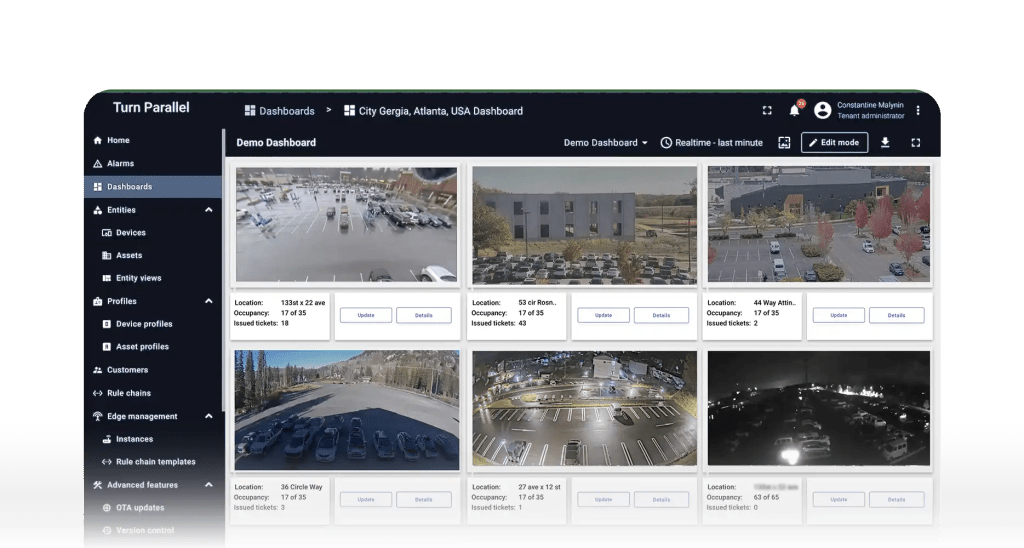
Parking enforcement technology is a crucial component in the infrastructure of smart cities, especially as urban areas continue to grow. Modern systems often incorporate camera-based monitoring that detects unauthorized or overstayed vehicles, optimizing the use of available parking spaces and reducing congestion. Smart technologies[30] are typically connected to IoT networks, allowing real-time data collection and integration with city-wide traffic management systems.
Advanced image processing algorithms and AI tools enable these cameras to accurately identify vehicles, log timestamps, and even cross-reference with digital payment records, ensuring efficient and equitable parking enforcement.
Connectivity and Networks

With the advent of technologies such as 5G, smart cities are poised to benefit from faster and more reliable connectivity[13]. This high-speed access enables the
integration of advanced applications, such as augmented reality and comprehensive AI systems, which can enhance the functionality of urban environments.
By utilizing these technologies, smart cities aim to create interconnected urban ecosystems that improve the quality of life for their residents while addressing challenges related to sustainability and efficiency.
Applications of Smart City Solutions
Smart city solutions encompass a wide range of applications aimed at enhancing urban living, improving efficiency, and promoting sustainability. These solutions integrate advanced technologies with city infrastructure to create environments that are responsive to the needs of their citizens.
Infrastructure and Urban Management
Smart cities leverage data-driven technologies for infrastructure management. For instance, smart buildings utilize real-time space management and structural health monitoring to determine when repairs are necessary, while also enabling citizens to report issues like potholes or leaks directly to officials.[16][15] This interconnected system of services helps optimize resource allocation and response times, reducing maintenance costs and improving urban resilience.
Transportation Optimization
One of the most notable applications of smart city technology is in transportation management. Advanced public transportation systems utilize real-time data sharing among vehicles, enhancing their coordination and efficiency. This system allows riders to receive up-to-date information about transit schedules, which can significantly decrease waiting times and improve overall user experience.[17][18] Additionally, smart traffic management employs sensors to monitor traffic flows and optimize traffic light patterns, which can reduce congestion and improve air quality.[15]
Energy and Resource Management
Smart grids are critical components of smart cities, integrating information and communication technologies (ICT) to optimize energy distribution and consumption.- [19][17] These grids allow for real-time monitoring and control, facilitating energy conservation efforts and enabling the integration of renewable energy sources. Smart buildings further contribute to energy efficiency by automating processes based on energy usage data, leading to significant reductions in energy waste.[19]
Waste Management Solutions
In the realm of waste management, smart cities implement systems that enhance the efficiency of waste collection and recycling. Smart waste management technologies utilize sensors to track waste levels in bins, allowing for more efficient collection routes and reducing operational costs.[20][18] These systems support the creation of closed-loop economies by converting waste into resources, thus promoting sustainability and reducing landfill reliance.
Citizen Engagement and Safety
Smart city initiatives also focus on citizen engagement and safety. Citizens can interact with city officials through digital platforms to report issues or provide feed- back on services, fostering a collaborative environment.[15][19] Moreover, advanced safety measures, such as gunshot detection systems, can enhance public safety by enabling rapid response to incidents, although they raise important privacy considerations.[17]
Participatory Planning Processes
Participatory planning processes are integral to the development of smart cities, emphasizing the involvement of the entire community in decision-making regarding urban planning. This approach emerged as a response to the centralized and rationalistic methods that characterized earlier urban planning paradigms, advocating for more inclusive and democratic practices[21][22].
Origins and Evolution
Historically, participatory planning has evolved significantly, particularly with the advent of digital technologies that facilitate community engagement. Geographic
Information Systems (GIS), virtual reality, and online platforms have enhanced the ability of citizens to visualize planning proposals and contribute feedback, foster- ing broader participation in initiatives such as participatory budgeting in cities like Paris and New York[21][22]. The shift towards sustainability and resilience in urban planning also underscores the importance of participatory approaches in addressing contemporary challenges such as climate change and disaster risk[21].
Methods and Tools
Participatory planning employs a variety of methods and tools to engage the public in the urban planning process. Since the 1960s, tools like referendums, focus groups, consensus conferences, and public hearings have been widely utilized to encourage community involvement[21]. More comprehensive methodologies, such as Participatory Rural Appraisal, and the integration of social media and other digital tools have further transformed how communities interact with urban planning initiatives[21][22].
Global Applications
Cities around the world have adopted participatory planning to address unique local needs. Initiatives led by organizations like UN-Habitat demonstrate the potential of participatory methodologies to tackle urban challenges, with successful examples emerging from cities such as Helsinki, Auroville, Istanbul, and Calgary[22]. By prioritizing the active involvement of all community members, participatory planning not only democratizes urban design but also yields systems-level benefits that enhance the quality of urban life[22].
As governments increasingly recognize the value of inclusive decision-making, participatory planning continues to shape the future of urban development, facilitating a collaborative and sustainable approach to city planning[22].
Challenges in Developing Smart Cities
Smart cities face a multitude of challenges that must be strategically addressed to harness the full potential of connected technologies and data. These challenges include rapid urbanization, infrastructure strain, mobility issues, and environmental concerns, all compounded by technological advancements and the need for global competitiveness.[23]
Urbanization and Infrastructure Strain
As populations in urban areas continue to grow, cities are under pressure to expand and improve their systems and infrastructure. This rapid urbanization leads to congestion, housing shortages, and increased demands on public services.[23][15] Smart city initiatives must prioritize the efficient use of existing infrastructure while also planning for future growth to maintain a high quality of life for residents.[15]
Environmental Sustainability
Climate change, air pollution, and the depletion of natural resources pose significant threats to urban areas. Smart cities must find ways to reduce their carbon footprints while enhancing sustainability through innovative technologies.[23][18] The integration of responsible and ethical AI solutions can aid in achieving these goals, although concerns about environmental costs associated with big data technologies remain.[2]
Data Governance and Privacy
The reliance on data-driven solutions raises critical issues around data governance and privacy. The inadequacy of current data governance practices often prioritizes efficiency over regulatory compliance, leading to potential breaches of privacy.[2][17] Moreover, the sharing of residents’ personal data with private partners can create transparency concerns, as many residents may not have a say in how their data
is used. Establishing robust regulations and oversight mechanisms is essential to protect citizens’ privacy while leveraging data for public good.[2]
Technological Integration
The rapid pace of technological change necessitates that cities remain adaptable and innovative. However, the integration of advanced technologies, such as AI and IoT, can pose challenges regarding interoperability and system compatibility.[6][18] Cities must carefully plan their smart city strategies to ensure that technologies enhance rather than complicate urban processes.
Economic Considerations
While smart technologies can lead to long-term cost savings through increased efficiency, the initial investment can be significant. Cities face the dual challenge of securing funding for these technologies while managing ongoing maintenance costs.[17] As such, economic sustainability is a crucial factor in the successful development of smart cities.
Case Studies of Smart Cities
Smart cities have emerged worldwide, showcasing a variety of approaches and technologies aimed at improving urban living through innovation and sustainability. These cities can be broadly categorized into three types: master-planned cities built from scratch, retrofitted existing cities, and concept cities currently existing only on paper.[2][9] Notable examples include Songdo International Business District in South Korea, Singapore, Amsterdam, and Barcelona, each demonstrating unique strategies and solutions.
Singapore: A Model of Innovation
Singapore stands out as one of the most advanced smart cities globally, leveraging technology to enhance the quality of life for its residents. The city-state aims to have all cars on its streets be autonomous by 2025, incorporating self-driving shuttles and real-time traffic management systems.[24]
Waste Management: An automated system uses sensors in waste bins to optimize collection routes, minimizing fuel consumption and emissions.[25]
Transportation: Singapore implements electronic road pricing to manage traffic congestion, alongside autonomous buses and extensive bike-sharing programs to promote sustainable mobility.[25]

Barcelona: Pioneering Smart Solutions
Barcelona has been at the forefront of smart city technology for over a decade, aiming to enhance sustainability and citizen well-being.
Smart Buildings: Innovative designs, such as the Media-TIC building, utilize sensors to optimize energy consumption.[25]
Public Transport Innovations: AI-powered drones provide real-time security information while respecting privacy, and self-driving buses are planned for the future.[25]

Copenhagen: A Commitment to Carbon Neutrality
Copenhagen is globally recognized for its ambitious goal of achieving carbon neutrality by 2025.
Smart Streetlighting: Energy-efficient LED lights equipped with motion sensors adjust brightness based on activity levels, reducing energy consumption.[25]
Bicycle Infrastructure: An extensive bike network promotes cycling as a primary mode of transportation, significantly cutting reliance on fossil fuels.[25]

Future Trends in Smart Cities
As urbanization accelerates, the importance of smart cities continues to grow. By 2050, it is estimated that 70% of the world’s population will reside in urban areas, necessitating innovative solutions to enhance sustainability and reduce emissions[26]. Future trends in smart cities will likely be shaped by technological advancements, policy developments, and an increasing emphasis on environmental sustainability.
Integration of Advanced Technologies
The integration of advanced technologies such as the Internet of Things (IoT), Big Data, and artificial intelligence is expected to play a pivotal role in the evolution of smart cities. These technologies will facilitate real-time data collection and analysis, improving urban management and decision-making processes. For instance, smart technologies can optimize energy consumption in buildings and enhance public safety through improved surveillance systems[19][16].

Bibri, S. E. (2021). The underlying components of data-driven smart sustainable cities of the future: a case study approach to an applied theoretical framework. European Journal of Futures Research, 9(1). https://doi.org/10.1186/s40309-021-00182-3
Sustainable Urban Development
The concept of sustainable urban development is gaining traction, with a focus on minimizing carbon footprints and enhancing energy efficiency. The adoption of
sustainable practices in urban infrastructure will be critical, as cities aim to reduce emissions and promote environmentally friendly solutions. Governments and inter- national organizations are increasingly supporting initiatives that promote innovative solutions to environmental challenges, which will likely accelerate the transition toward sustainable smart cities[2][26].
Policy Frameworks and Stakeholder Collaboration
Effective policy frameworks will be essential for the successful implementation of smart city initiatives. Policymakers must align various stakeholders, including local governments, businesses, and citizens, to ensure a cohesive approach to urban development. The importance of policy over technology is emphasized, as innovative solutions alone cannot address the complex challenges cities face without supportive policies in place[2][27]. Collaborative projects among cities and countries are also expected to expand, leveraging shared expertise and resources to tackle common urban challenges[28].
Citizen Engagement and Digital Inclusion
Citizen engagement will be a cornerstone of future smart city initiatives. As demand for government transparency and accessibility increases, local governments are expected to adopt more inclusive policies that prioritize citizen involvement in decision-making processes. This digital transformation aims to meet citizens’ expectations for improved services while promoting equitable access to technology[29].
Resilience and Adaptability
Future smart cities will also prioritize resilience and adaptability in the face of challenges such as climate change and economic shifts. Urban environments will need to incorporate strategies that enhance their ability to withstand various disruptions, thereby ensuring long-term sustainability and quality of life for residents[26][27].
References
- : The Evolution of Urban Planning: Historical Perspectives
- : Environmentally sustainable smart cities and their converging AI, IoT …
- : Urban Planning History: A Timeline of Key Events
- : American Urban Planning Since 1850 – Oxford Research Encyclopedias
- : Impact of IoT for smart cities & urban development – Peerbits
- : Top 12 Smart Cities in the U.S. – Smart Cities Examples
- : Explainer: What Is a Smart City? – Earth.Org
- : Smart city – Wikipedia
- : Smart Cities: Definition, Origin Characteristics, & Examples
- : IoT in Smart Cities: A Survey of Technologies, Practices and … – MDPI
- : Enabling Technologies for Next-Generation Smart Cities: A … – MDPI
- : What is a smart city? – IBM
- : The Top 4 Internet Of Things Trends In 2023 – Forbes
- : 18 Smart-City Technologies That Will Genuinely Improve Urban Living
- : What is a Smart City? – Definition and Examples – TWI
- : The underlying components of data-driven smart sustainable cities of …
- : Balancing Privacy and Innovation in Smart Cities and Communities
- : 5 Key Elements of a Smart City: List of Vital Components
- : Key components of smart city infrastructure – An overview – RoboticsBiz
- : Urban planning – Industrialization, Infrastructure, Cities | Britannica
- : Participatory planning – Wikipedia
- : Participatory Planning: Shaping Cities through Community … – ArchDaily
- : 7 Elements of a Successful Smart City Strategy
- : Top 10 Most Futuristic Smart Cities in the World (2023)
- : Top 10 Most Sustainable Smart Cities in the World
- : Top 7 Smart Cities in the World in 2024 – Earth.Org
- : Empowering Cities for a Net Zero Future – Analysis – IEA
- : Integrating City Master Plans with Sustainable and Smart Urban … – MDPI
- : 13 predictions about the trends that will shape smart cities in 2023
Transform Your Parking Management Today
